What to Expect During a Commercial Office Cleanout
Planning an office cleanout? Here's exactly what happens on the day — from desks and cubicles to e-waste, after-hours scheduling, and how commercial pricing differs from residential.
Quick answer
Planning an office cleanout? Here's exactly what happens on the day — from desks and cubicles to e-waste, after-hours scheduling, and how commercial pricing differs from residential.
What a commercial office cleanout actually involves
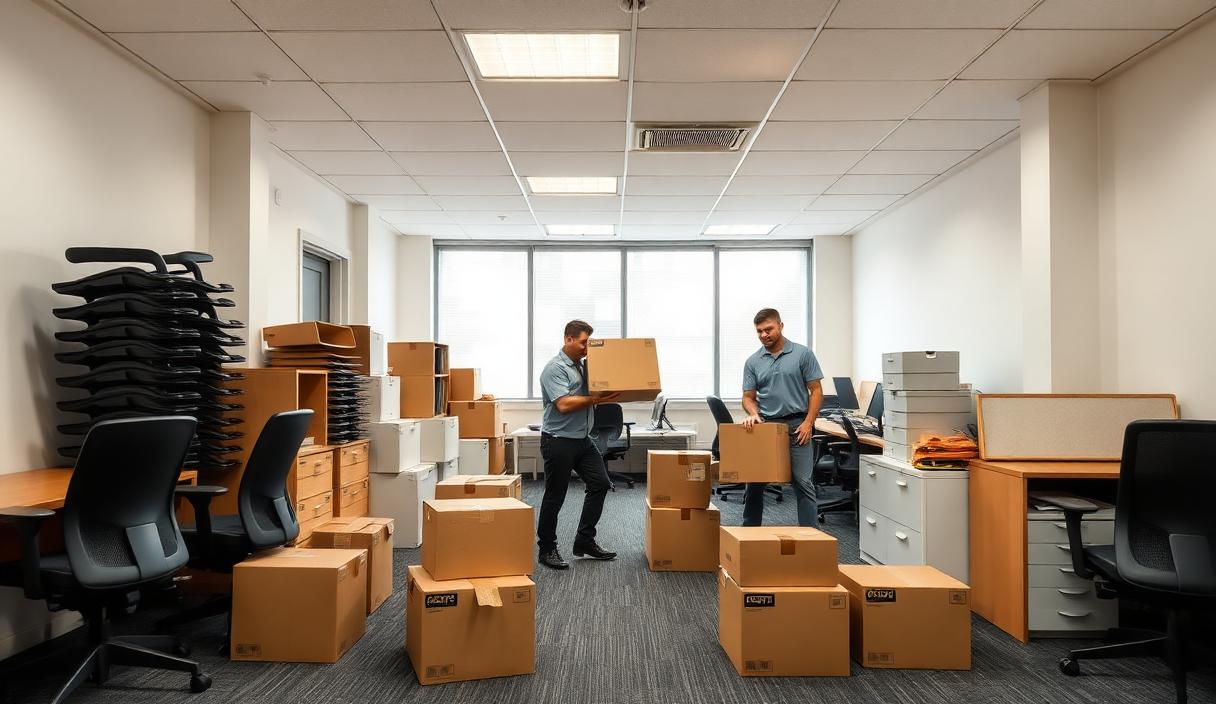
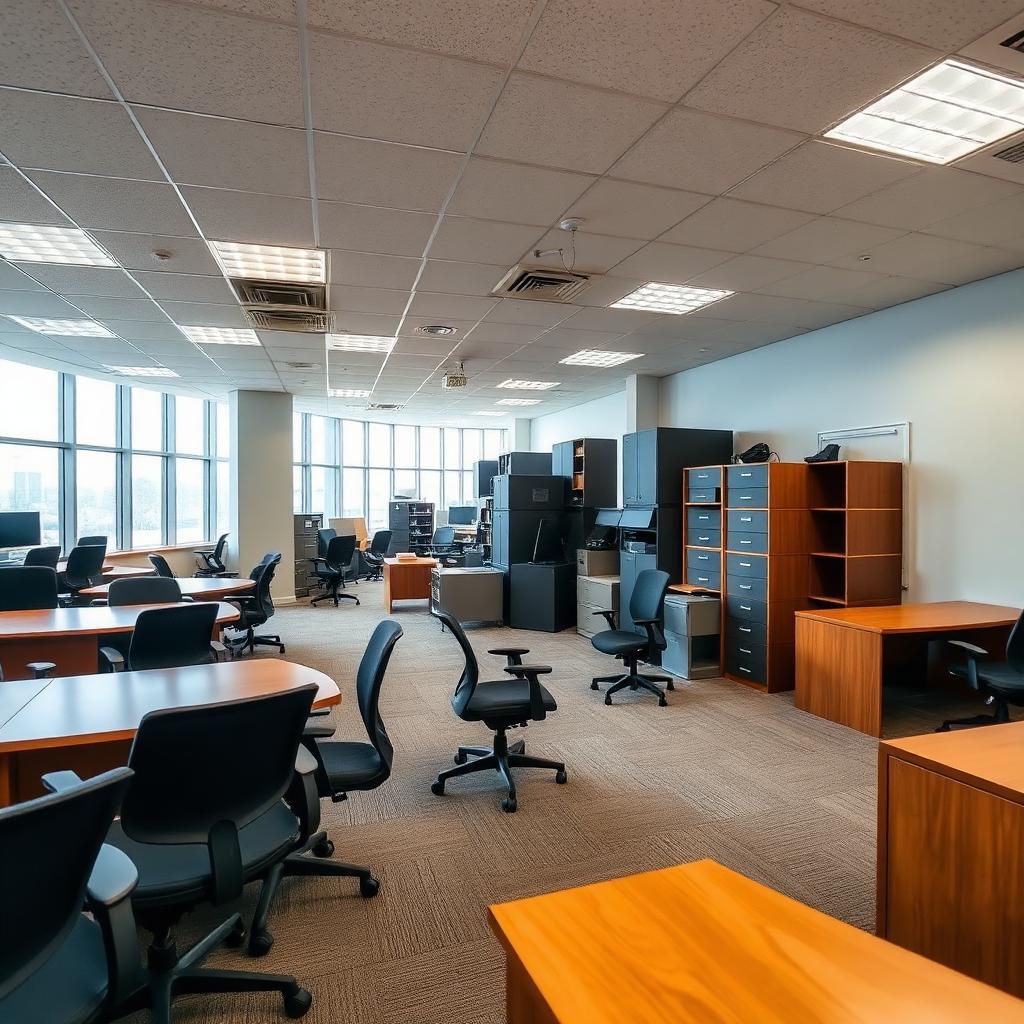
A typical office cleanout is more than just hauling desks to the curb. It usually covers workstations and cubicles, executive furniture, filing cabinets full of records, breakroom appliances, conference tables, and a surprising amount of electronics — monitors, printers, servers, and cables that all need to be separated for e-waste handling. Every building is different, but the sequence is usually the same: walk the space, tag what stays, disassemble what needs breaking down, protect floors and elevators, and load in trips that respect the building's freight rules.
Desks, cubicles, and filing cabinets — the bulky stuff
Modular cubicle systems and L-shaped desks almost always need to come apart before they'll fit through a doorway or elevator. A crew that does commercial work regularly brings the right drivers and blades for it. Filing cabinets are heavier than they look — a full lateral file can push 400+ lbs and needs to be emptied or dollied carefully so you don't gouge floors or wedge an elevator.
Electronics and e-waste (do not throw these in a dumpster)
Monitors, CPUs, printers, UPS batteries, and networking gear are regulated e-waste in California and can't legally go in a landfill dumpster. A commercial cleanout should separate these on-site and route them to a certified e-waste processor. Ask your hauler up front how they handle it — a real answer beats a vague 'we recycle everything.'
After-hours and weekend scheduling
Most offices can't shut down for a cleanout during business hours, so commercial jobs are commonly scheduled after 5pm or on weekends. That also lines up with building rules — many property managers require freight elevator reservations, certificates of insurance on file, and floor protection before a crew is allowed in. Give your hauler at least a few days lead time so they can coordinate with building management.
How commercial pricing works vs residential
Residential jobs are usually priced by volume (fraction of a truck). Commercial cleanouts are bigger and messier, so pricing is typically a walk-through estimate that factors in total volume, disassembly labor, e-waste separation, after-hours premiums, and disposal fees for regulated materials. For anything larger than a single small office, expect an on-site or video walk-through instead of a flat phone quote.
See it in action: a recent Modesto office cleanout
We recently completed a full office cleanout in Modesto — desks, chairs, filing cabinets, and equipment removed and the space left ready for its next tenant. You can see the before/after and short walk-through videos on the Office Desk & Furniture Cleanout project page. It's a good example of what a real commercial haul-away looks like end to end.
How to prep before the crew arrives
A few things speed a commercial cleanout up dramatically: pull anything you're keeping and label it clearly, empty filing cabinets (or tell the crew if the contents also need shredding), disconnect and stack electronics, reserve the freight elevator, and share the building's certificate-of-insurance requirements with your hauler ahead of time. Twenty minutes of prep can shave an hour off a job.
Ready to schedule?
If you're planning an office move-out, downsizing, or lease turnover, commercial junk removal is the right starting point. We'll do a walk-through, price the whole scope up front, and schedule after-hours if your building requires it.
Helpful resources
Service area & nearby cities
JP's Junk Removal serves homes and businesses across the Central Valley.
See real completed projects
Browse recent before-and-after junk removal projects from homes and businesses across the Central Valley, or get a free instant quote for your own pickup.
Frequently Asked Questions
Do you clean out offices after business hours?
Yes. Most commercial cleanouts are scheduled after 5pm or on weekends so we don't disrupt operations, and so we can meet building freight-elevator and COI requirements.
Can you take office electronics and monitors?
Yes. Monitors, CPUs, printers, and other e-waste are separated on-site and routed to a certified e-waste processor — they don't go in the landfill.
Do you disassemble cubicles and modular workstations?
Yes. Cubicle panels, connectors, and modular desks are broken down on-site so they fit through doorways and elevators without damaging the building.
How is commercial pricing different from residential?
Commercial jobs are priced from a walk-through that includes total volume, disassembly labor, e-waste separation, any after-hours premium, and disposal fees for regulated materials — not a flat phone quote.
What do I need to have ready before the crew arrives?
Anything you're keeping should be labeled and pulled aside, filing cabinets emptied (or flagged for shredding), and the freight elevator reserved with building management. Share any COI requirements with us in advance.
Need junk removed?
Get a free instant quote or call us today.